
The mystery of sleep: How does the brain know when it’s time to sleep?
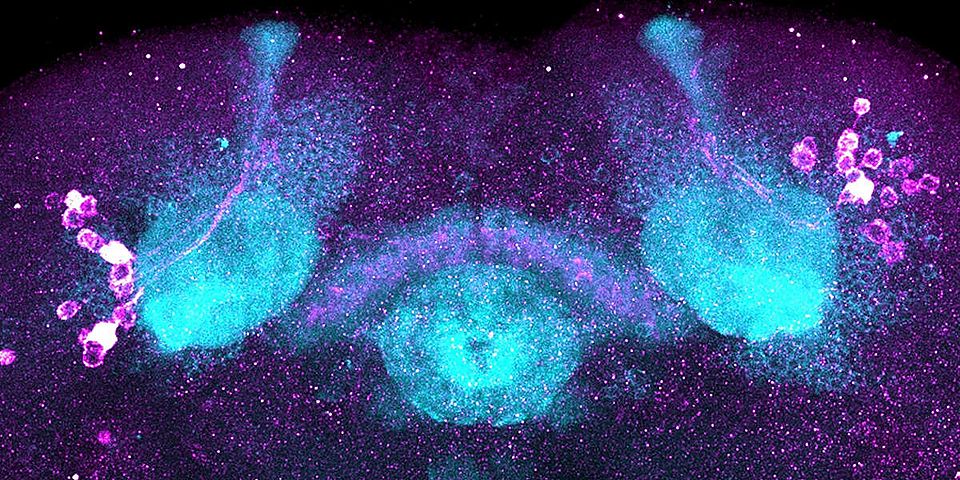
Why do we feel an irresistible drive to sleep after being awake for too long? A recent study led by Prof. Anissa Kempf at the Biozentrum, University of Basel, has revealed that in fruit flies, a small set of neurons can sense when the fly needs rest.
Sleep is universal and essential: not only humans, but even flies and jellyfish sleep for a significant portion of the day. Like eating or mating, sleep is also controlled by motivational drives. Our drive to sleep increases as the need builds up and resets once it is satisfied. But what actually tells us that it's time to sleep?
Prof. Anissa Kempf at the Biozentrum, University of Basel, has long been interested in how sleep drive is generated in the brain. In earlier work in the fruit fly, she identified a molecular sensor, which helps the fly decide when it’s time to sleep. Until now, however, it was unclear in which sleep-control neurons this mechanism specifically operates. In this new study, Anissa Kempf and her team identify the specific sleep-promoting cells in which this sensor acts.
More