
Two FMI groups recognized for innovative approaches to animal research
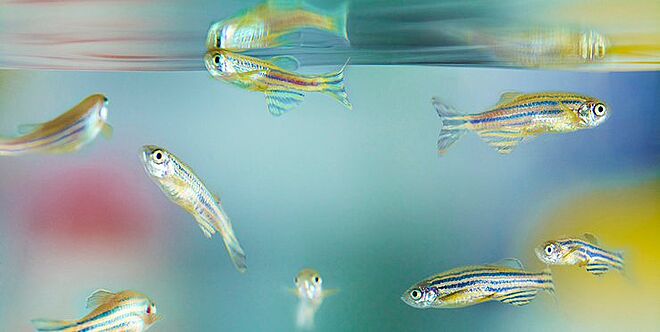
At an internal Novartis event, two FMI labs were recognized for their contributions to the 3Rs (Replace, Reduce and Refine). Rainer Friedrich’s group received a 3Rs Award for establishing zebrafish as an alternative model for neuroscience research, while Anupama Hemalatha’s team received 3Rs Innovation funding for a proposed project using ultrasound to reduce unnecessary animal use.
Animal research remains important in biomedical research when no suitable alternative can address a scientific question. This is also the case at the FMI, where researchers use mice and fish to investigate complex biological processes. Animal research at the FMI is conducted within Switzerland’s strict regulatory framework and guided by the principles of the 3Rs. These principles aim to replace animal experiments wherever possible, reduce the number of animals used when experiments are necessary, and refine procedures to minimise pain, suffering and distress. More